Canoeing in Uganda and Rwanda
Canoeing in Uganda and Rwanda offers a quieter way to explore lakes, wetlands, rivers and rural landscapes. From traditional canoe journeys on highland lakes to kayaking along Lake Kivu, paddling can bring travellers closer to scenery, birdlife, islands and communities while travelling at a relaxed pace.
Uganda offers a diverse range of water-based experiences, including Lake Bunyonyi, Lake Mutanda, wetlands around Lake Victoria, Jinja’s waterways and selected crater-lake areas. Rwanda adds Lake Kivu and the Mukungwa River, giving travellers opportunities for both lake kayaking and river canoeing.
Canoeing can be planned as a short excursion or incorporated into a wider safari alongside wildlife viewing, gorilla trekking, birding, hiking, cultural experiences and other adventure activities.
What Is Canoeing as a Safari Experience?
Canoeing is a human-powered water activity that allows travellers to explore lakes, rivers and wetlands from the water. The experience can range from a relaxed paddle on a calm lake to a guided journey through a wetland or along a river.
Unlike a conventional boat cruise, canoeing gives travellers a more active role in the journey and a quieter way to experience the surrounding landscape. Depending on the destination, the focus may be scenery, birdwatching, islands, local communities or simply enjoying time on the water.
Canoeing and kayaking are related activities, but the equipment and paddling techniques can differ. On this page, both experiences are included where they form part of Uganda and Rwanda’s wider water-based adventure opportunities.
Where Can You Experience Canoeing in Uganda?
Uganda offers a variety of settings for canoeing in Uganda, from highland lakes and wetlands to waterways around Jinja and the Lake Victoria region.
Lake Bunyonyi
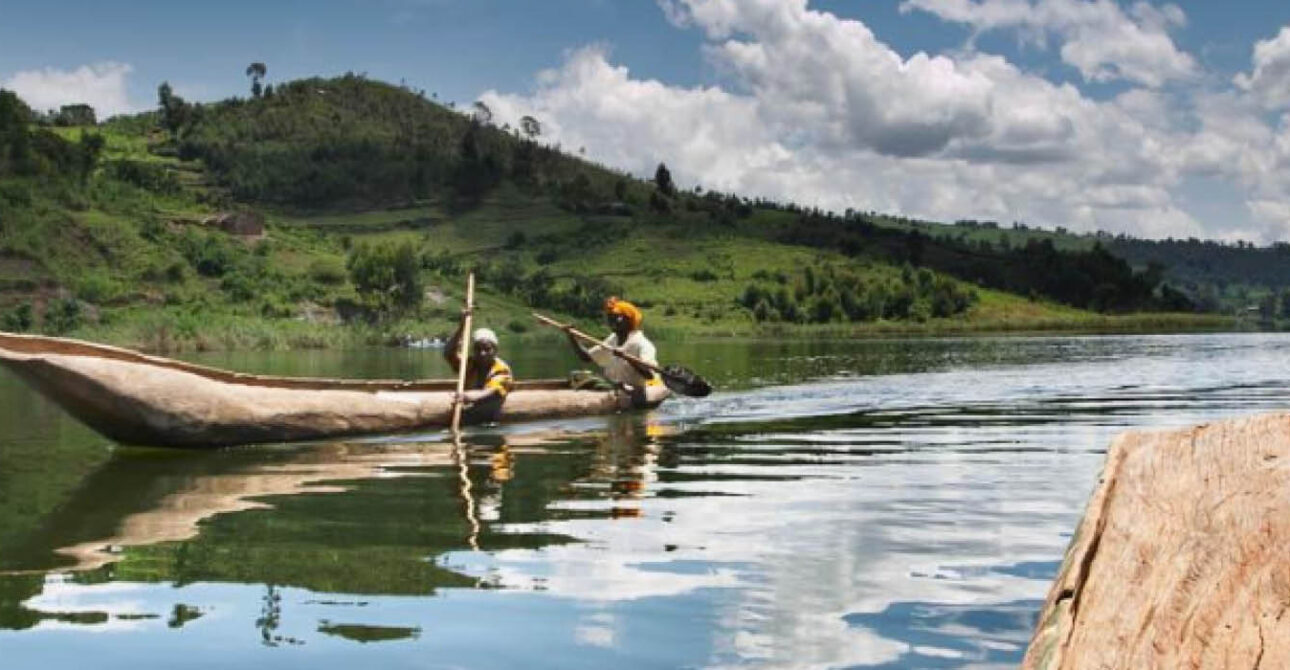
Lake Bunyonyi is one of Uganda’s most distinctive canoeing destinations. The lake is surrounded by steep, terraced hills and dotted with numerous islands, creating a scenic environment for traditional canoe trips and relaxed exploration.
Canoeing can be combined with island visits, birdwatching and community experiences, making Lake Bunyonyi particularly suitable for travellers who want a slower-paced activity alongside a wider southwestern Uganda itinerary. Current Uganda tourism information also identifies canoeing as one of the lake’s visitor experiences.
Lake Mutanda
Lake Mutanda lies near Kisoro in southwestern Uganda, with the Virunga volcanoes forming a dramatic backdrop. Canoeing provides a way to experience the lake from the water while taking in the surrounding mountains and shoreline landscapes.
The area can work particularly well within an itinerary that combines canoeing with gorilla trekking, golden monkey tracking, hiking or other experiences around Bwindi and Mgahinga. Uganda Wildlife Authority planning material also identifies canoeing on Lake Mutanda among tourism opportunities in the Kisoro area.
Mabamba Wetland
Mabamba Swamp provides a different kind of paddling experience from the highland lakes. Its wetland landscape is particularly associated with birdwatching, including opportunities to search for the Shoebill.
A canoe-based wetland experience allows travellers to move quietly through waterways and vegetation while observing the surrounding bird habitat. Mabamba is part of the wider Lake Victoria wetland environment, giving canoeing here a strong nature and birding dimension.
Jinja and the Nile
Jinja offers water-based adventure around the Nile and Bujagali area. Jinja District identifies Bujagali Lake as a location for excursions, birdwatching, sunset cruises and canoeing. Canoeing around Jinja can therefore form part of a broader adventure itinerary that includes the Source of the Nile, cultural experiences and other activities in the region.
Tooro Kingdom and the Crater Lakes
The Tooro Kingdom is surrounded by numerous volcanic crater lakes, creating a distinctive landscape of water, hills and agricultural countryside. Selected crater lakes can be incorporated into canoeing experiences, giving travellers a water-level perspective of the surrounding volcanic landscape.
Canoeing here works particularly well alongside the wider western Uganda circuit, including Kibale Forest, the Rwenzori region and Fort Portal’s cultural and scenic attractions. Current tourism information identifies canoeing among the experiences available around some of the crater lakes.
Where Can You Experience Canoeing and Kayaking in Rwanda?
Kayaking in Rwanda is particularly associated with Lake Kivu, while canoeing also extends to river environments such as the Mukungwa in the foothills of the Virunga Volcanoes. The country’s mountainous scenery gives water-based experiences a strong landscape component.
Lake Kivu
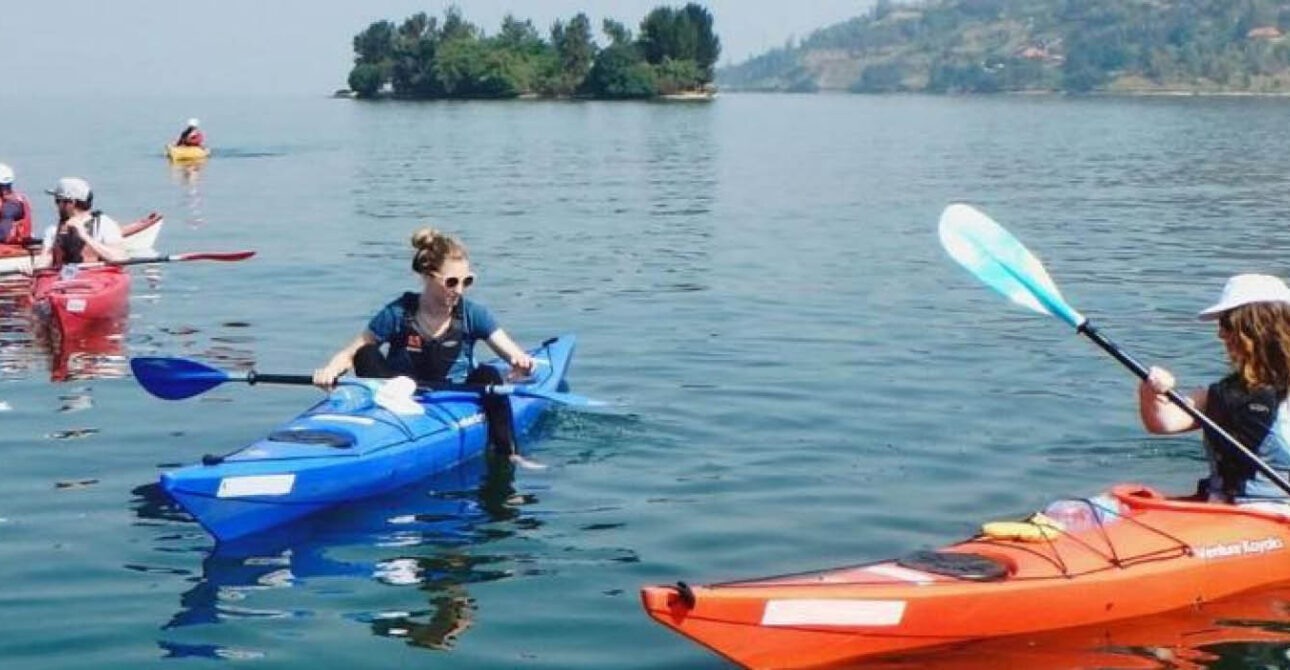
Lake Kivu provides Rwanda’s most prominent setting for kayaking in Rwanda. Its mountainous shoreline, islands and rural communities create a scenic environment for exploring the lake by kayak.
Experiences can range from short paddles to longer journeys lasting several days. Sunset paddling and exploration around the lake’s islands provide additional ways to experience the landscape from the water.
Mukungwa River
The Mukungwa River offers a different type of paddling experience from Lake Kivu. Canoeing along the river takes place in the foothills of the Virunga Volcanoes, where the surrounding landscape and birdlife add another dimension to the journey.
This experience can be incorporated into a wider northern Rwanda itinerary alongside Volcanoes National Park and other experiences around Musanze.
What Can You Experience While Canoeing?
Canoeing is not simply about getting from one point to another. The character of the experience changes according to the waterway, landscape and purpose of the journey.
Scenic Lake Canoeing
Scenic canoeing focuses on landscapes, islands, mountain views and the tranquillity of being on the water. Lake Bunyonyi, Lake Mutanda and Lake Kivu each provide different scenery and perspectives from the water.
Wildlife and Birdwatching
Water-based experiences can provide opportunities to observe birds and other wildlife associated with lakes, wetlands and rivers. Mabamba, in particular, adds a strong birding dimension to canoeing through its wetland habitat.
Island Exploration
Canoeing can provide a practical and memorable way to explore islands and smaller waterways. Lake Bunyonyi and Lake Kivu both offer opportunities to experience island landscapes as part of a broader water-based journey.
Community and Cultural Experiences
Some canoeing journeys pass through areas where fishing and other lakeside livelihoods form part of everyday life. These encounters can add a cultural dimension to the experience when approached respectfully and arranged with local communities.
Sunrise and Sunset Paddling
Calmer periods around sunrise and sunset can provide a different atmosphere on the water, with changing light, reflections and quieter surroundings. Specific departure times depend on the destination and local operating arrangements.
Multi-Day Paddling Experiences
Longer paddling journeys can combine canoeing or kayaking with accommodation, transfers, hiking, cultural experiences and other activities. Lake Kivu, for example, has kayaking experiences ranging from short excursions to journeys lasting two or three days.
Canoeing in Uganda vs Rwanda: How Do the Experiences Differ?
Uganda offers a broad mix of canoeing environments, including highland lakes, wetlands, crater lakes and waterways around Jinja and Lake Victoria. Lake Bunyonyi and Lake Mutanda provide scenic highland experiences, while Mabamba introduces wetland birding and Jinja adds a Nile-related adventure setting.
Rwanda’s paddling experiences are particularly concentrated around Lake Kivu and the Mukungwa River. Lake Kivu combines kayaking with mountainous scenery, islands and lakeside communities, while the Mukungwa provides a river-based experience in the Virunga foothills.
The most suitable experience depends on the traveller’s interests, available time and preferred combination of scenery, wildlife, birding, culture and other safari activities.
How Do You Arrange a Canoeing Experience?
A canoeing experience can be arranged as a short excursion, a half-day activity or part of a longer Uganda or Rwanda safari. The route, duration and type of craft should be matched to the destination, water conditions, your experience and the other activities planned for the journey.
For longer itineraries, canoeing does not need to occupy the entire day. It can be combined with accommodation, wildlife viewing, birding, hiking, cultural experiences or other adventure activities. This allows the paddling experience to complement the wider safari rather than determine the entire itinerary.
At Njagi Safaris, canoeing can be incorporated into a tailor-made itinerary around your preferred destinations, travel dates and interests. Read. Adventure Activities in Uganda and Rwanda: A Traveller’s Guide.
When Is the Best Time for Canoeing in Uganda and Rwanda?
Canoeing can be planned at different times of the year, but conditions on lakes, rivers and wetlands can change with rainfall, wind, water levels and local weather. Calmer conditions can make paddling more comfortable, while stronger winds or heavy rain may affect some routes and departure times.
The most suitable timing also depends on the destination. A quiet lake excursion at Lake Bunyonyi, a wetland birding experience at Mabamba and kayaking on Lake Kivu can have different practical considerations.
For a broader guide to seasonal travel conditions in Uganda, see Best Time to Visit Uganda. Before confirming a route, we consider the destination, seasonal conditions, duration, water environment and the wider safari programme.
Is Canoeing Suitable for Beginners?
Canoeing can be suitable for beginners when the experience is matched to the destination, water conditions and level of support provided. Calm-water excursions can offer a gentle introduction to paddling without requiring advanced technical skills. Some organised kayaking experiences on Lake Kivu specifically state that previous experience is not required.
Beginners should still receive an orientation before entering the water and follow the instructions of the guide or activity provider. Travellers should also communicate any concerns about swimming ability, confidence on the water or physical limitations before the activity begins.
How Difficult Is Canoeing?
The physical demands of canoeing vary according to the craft, distance, water conditions, wind, current and duration of the experience. A short paddle on a calm lake can be relatively relaxed, while longer journeys or moving-water routes can require greater endurance and paddling control.
Your level of experience is also important. Beginners may prefer shorter guided excursions, while experienced paddlers may be interested in longer journeys or more active routes. The itinerary should therefore be selected according to your comfort level, fitness, experience and the conditions expected at the destination.
What Should You Wear and Carry for Canoeing?
Wear comfortable clothing that can get wet and is suitable for warm outdoor conditions. A hat, sunglasses and sun protection are useful during exposed daytime paddling, while lightweight clothing can make the experience more comfortable.
Carry drinking water and keep personal valuables protected from splashes. Depending on the length and location of the experience, additional items may be appropriate. Your activity provider can advise on specific equipment and luggage arrangements before departure.
What Equipment Is Used for Canoeing?
Equipment varies according to the destination and type of paddling experience. A typical guided canoeing or kayaking activity may include the appropriate craft, paddles and personal flotation equipment, with other safety or support equipment provided according to the route.
Uganda has an established canoe and kayak sporting structure, and the National Council of Sports has documented the provision of kayaks, canoes and rescue craft through the country’s canoe and kayak programme.
Travellers should confirm what is included before departure rather than assuming that every destination provides the same equipment. Personal items such as sun protection, suitable clothing and secure protection for valuables should be prepared separately.
Canoeing Safety and Water Awareness
Safety begins with choosing an appropriate route and following the instructions of the activity provider or guide. Before entering the water, travellers should receive a briefing covering the craft, paddling technique, route, expected conditions and basic safety procedures.
Wear the provided personal flotation equipment as instructed and remain within the designated route or area. Weather and water conditions can change, so guides may adjust the route or timing when necessary.
Travellers should also disclose relevant concerns about their swimming ability, confidence on the water or physical limitations before setting out. A guided experience should always take account of the conditions and the ability of the participants.
Responsible Canoeing and Community Tourism
Responsible canoeing means protecting the waterways, wildlife and communities that make these experiences possible. Avoid leaving waste behind, keep noise to a minimum around wildlife and follow local guidance on where to paddle, land or approach sensitive areas.
Community encounters should also be respectful. Ask before photographing people, respect fishing and other local activities, and support locally owned services where appropriate. Canoeing can provide a closer perspective on lakeside and riverside communities, but those communities should be experienced as living places rather than simply as tourist attractions.
Uganda has an organised canoe and kayak sector represented through the Uganda Canoe Kayak Federation, while the International Canoe Federation provides an international framework for canoe and kayak sport. Rwanda’s Lake Kivu experiences also connect paddling with local fishermen, islands and lakeside communities, making respectful interaction an important part of the experience.
Can Canoeing Be Combined With Other Safari Activities?
Canoeing works particularly well as one component of a broader safari. In Uganda, it can be combined with gorilla trekking, wildlife viewing, birding, hiking, cultural experiences and other activities depending on the destination.
In Rwanda, kayaking on Lake Kivu can complement gorilla trekking, hiking, cycling and other experiences around the western and northern parts of the country. Lake Kivu’s location also makes it practical to incorporate paddling into a wider Rwanda itinerary.
At Njagi Safaris, the canoeing component can be selected around the wider itinerary rather than treated as an isolated activity. This allows travellers to balance time on the water with wildlife, nature, culture and relaxation.
Related Adventure Experiences
Canoeing can be combined with other outdoor activities to create a broader Adventure Safari in Uganda and Rwanda. Depending on the destination, travellers can add Cycling in Uganda and Rwanda for active exploration on land or White Water Rafting in Uganda and Rwanda for a more energetic river experience. For travellers looking beyond individual activities, explore our Adventure Safaris in Uganda and Rwanda to see how different experiences can be incorporated into a tailor-made itinerary.
Frequently Asked Questions About Canoeing
Yes. Canoeing and kayaking can be suitable for beginners when the route, craft and conditions are appropriate. Calm-water excursions and guided experiences can provide an accessible introduction to paddling. On Lake Kivu, current visitor guidance states that previous kayaking experience is not required.
Previous experience is not always necessary. The requirement depends on the type of water activity, route and provider. Beginners should receive an orientation before entering the water and follow the guide’s instructions throughout the experience. More demanding or longer paddling routes may require greater confidence and physical ability.
Yes. Lake Bunyonyi is one of Uganda’s recognised destinations for canoeing, with the lake and its islands offering opportunities for leisurely paddling and scenic exploration. Tourism Uganda specifically highlights dugout canoe experiences on the lake, including morning paddles.
Yes. Canoeing is one of the recreational activities available around Lake Mutanda in southwestern Uganda. The lake provides a scenic setting surrounded by hills and volcanic landscapes, making paddling a natural addition to a safari in the Kisoro area.
Yes. Lake Kivu is Rwanda’s principal destination for kayaking, with organised experiences ranging from shorter excursions to longer paddling trips. Canoeing is also available along the Mukungwa River in the foothills of the Virunga Volcanoes.
Canoeing and kayaking both involve travelling across water using a paddle, but the craft and paddling techniques differ. Canoes are generally open on top and commonly use a single-bladed paddle, while kayaks typically have a closed deck and use a double-bladed paddle. The activity offered depends on the destination and operator.
The duration depends on the destination and itinerary. A paddling experience can be a short excursion, a half-day activity or part of a longer adventure. On Lake Kivu, organised kayaking experiences can range from a couple of hours to two or three days.
Canoeing can provide opportunities to observe birds, lakeside vegetation, islands and surrounding landscapes from the water. Some Ugandan waterways are specifically promoted for canoeing alongside wildlife and birdwatching, while Lake Kivu offers views of birds, fishermen and lakeside environments.
Yes. Canoeing can form part of a wider itinerary in southwestern Uganda or Rwanda. For example, Lake Bunyonyi can complement a gorilla trekking itinerary in the Bwindi area, while Lake Kivu is within reach of Volcanoes National Park and can provide a relaxing outdoor experience before or after other activities.
Why Choose Njagi Safaris for Your Canoeing Experience?
Canoeing with Njagi Safaris can be incorporated into a wider Uganda or Rwanda itinerary rather than treated as a standalone activity. We can help match the paddling experience to your destination, travel dates, interests and preferred pace.
Our approach is to build the experience around the journey as a whole, taking account of accommodation, transfers, activity timing and the practical requirements of the destination.
Plan Your Canoeing Experience
Canoeing can be planned as a short activity or incorporated into a longer Uganda or Rwanda safari. Tell us your preferred destination, travel dates, group size and interests, and we can help shape a suitable itinerary around the experience.
Explore Our Safari Collections
- Uganda Safaris: Discover tailor-made Uganda safaris combining wildlife, primates, nature, culture and adventure.
- Rwanda Safaris: Explore Rwanda through gorilla trekking, wildlife, landscapes, culture and active experiences.
- Safari Collections: Choose from our carefully structured safari collections and find an itinerary that matches your preferred level of travel.

The Thousand Hills
Classic Explorer
Pearl & Thousand Hills Grand
Prefer a Custom Safari? Send Us Your Enquiry
Have canoeing in mind but not sure how to fit it into your safari? Send us your travel dates, preferred destinations, group size and interests. We can help you develop a tailor-made Uganda or Rwanda itinerary around your plans.