
Nature Walks in Uganda and Rwanda
Nature Walks in Uganda and Rwanda offer a relaxed way to explore natural environments on foot, with time to observe landscapes, plants, birds, butterflies, insects and other signs of wildlife. Unlike more demanding hikes, nature walks can focus on interpretation, observation and the character of the surrounding environment rather than covering long distances or reaching a mountain summit.
Uganda offers guided walking experiences in forests, savannahs, wetlands and protected areas, while Rwanda provides opportunities to explore forest landscapes, volcanic surroundings and scenic countryside on foot. Depending on the destination, a nature walk can complement Wildlife Viewing, Chimpanzee Tracking, Gorilla Trekking, Birding, Forest Walks and Hiking, adding a slower and more immersive element to a safari.
What Is a Nature Walk?
A nature walk is a guided walking experience focused on observing and understanding the natural environment. Instead of concentrating on reaching a particular summit or covering a long trail, the experience allows travellers to move at a manageable pace while paying attention to vegetation, birds, insects, butterflies, wildlife signs, scenery and other features of the landscape.
In Uganda and Rwanda, nature walks can take place in different habitats, including forests, savannahs, wetlands, woodland and mountain environments. The character of the experience therefore depends on the destination and the trail selected. Some walks are relatively gentle, while others involve uneven ground, slopes or longer distances. A guided nature walk can also provide opportunities to learn about conservation, ecosystems and the relationship between protected areas and surrounding communities.
Where Can You Experience Nature Walks in Uganda?
Uganda offers nature-walking opportunities across several protected areas and landscapes. Experiences vary considerably because the country’s walking environments include tropical forests, savannah, wetlands, riverine habitats and mountain ecosystems.
Queen Elizabeth National Park, for example, provides day and night nature-walk activities, while Toro-Semliki Wildlife Reserve offers a three-hour nature walk through habitats ranging from savannah woodland to riverine forest. Bwindi and Mgahinga also provide guided nature-based experiences that can complement the region’s famous primate activities.
Nature Walks in Queen Elizabeth National Park
Queen Elizabeth National Park provides nature-walking opportunities alongside its better-known game drives and Kazinga Channel boat experiences. UWA’s current booking system lists both day and night nature walks in the park. These walks can add a slower perspective to a safari focused on savannah, wetlands and wildlife.
Nature Walks in Toro-Semliki Wildlife Reserve
Toro-Semliki Wildlife Reserve offers a three-hour nature walk through a combination of savannah woodland and riverine forest. UWA notes opportunities to encounter birds, primates and other wildlife along the route. The experience can be combined with game drives, boat activities and community tourism.
Where Can You Experience Nature Walks in Rwanda?
Rwanda’s landscapes provide opportunities for walking through forests, volcanic environments and scenic countryside. Nyungwe National Park is particularly important for guided forest-based walking, with a network of trails that can be used for nature exploration, hiking and other activities. The Volcanoes region also provides walking opportunities around its volcanic landscape.
The distinction between a nature walk and a demanding hike is useful when planning an itinerary. Rwanda’s official tourism information describes walking and hiking experiences across the western part of the country, extending from Volcanoes National Park through the Lake Kivu region to Nyungwe National Park.
Depending on the route, travellers may encounter forest vegetation, birds, butterflies, primates, scenic viewpoints and other features of the landscape. Nature walks can therefore complement Gorilla Trekking, Birding, Forest Walks and scenic travel without making the entire itinerary physically demanding.
Nature Walks in Nyungwe National Park
Nyungwe provides a rich setting for walking through rainforest landscapes. Its trails offer opportunities to observe forest vegetation, birds, butterflies and primates while exploring the wider ecosystem. Some routes are easy, while others are more demanding, so the trail should be selected according to fitness and available time.
Nature Walks Around the Volcanoes Region
The Volcanoes region provides opportunities to explore Rwanda’s volcanic landscape on foot. Walking experiences can complement Gorilla Trekking and other activities in the region, allowing travellers to appreciate mountain scenery, vegetation and local landscapes at a slower pace.
What Can You See During a Nature Walk?
A nature walk is often about noticing the smaller and less obvious elements of a destination. Depending on the habitat, travellers may observe birds, butterflies, insects, plants, trees, primates, antelopes and other wildlife, together with animal tracks, calls and other signs of activity.
The experience also changes with the landscape. A walk through woodland can reveal different vegetation and birdlife from a rainforest trail, while wetlands and savannah provide another combination of habitats. In Toro-Semliki, for example, UWA describes a nature walk through savannah woodland and riverine forest, with opportunities to encounter birds, warthogs, Uganda kobs, baboons and monkeys.
Nature Walk vs Forest Walk vs Hiking: What Is the Difference?
Nature walks, forest walks and hiking overlap, but they describe different styles of outdoor experience. A nature walk is generally focused on relaxed exploration and observation of the wider natural environment. A forest walk places greater emphasis on exploring a particular forest ecosystem, including its vegetation, birds, primates and other forest life.
Hiking usually places greater emphasis on walking distance, elevation, terrain or physical challenge. Some hiking routes may be short and relatively easy, while others involve steep slopes or extended mountain journeys. The distinction is therefore useful when selecting an activity according to fitness, interests and available time.
On a Uganda or Rwanda safari, the three experiences can complement each other. A traveller might choose a nature walk for relaxed observation, a forest walk for ecosystem exploration and hiking for a more active trail experience.
Nature Walks in Uganda’s Protected Areas
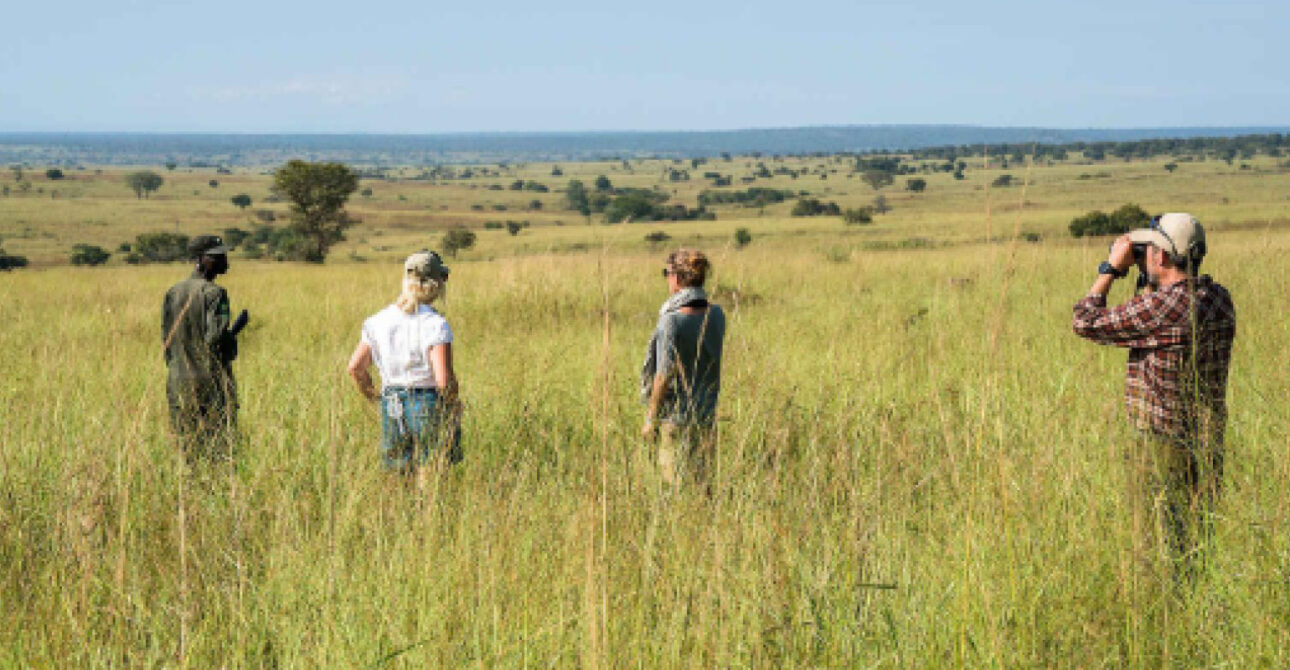
Uganda’s protected areas provide different settings for nature walks, allowing travellers to explore environments beyond conventional game drives. Queen Elizabeth National Park offers day and night nature walks, while Toro-Semliki Wildlife Reserve provides a longer guided walk through savannah woodland and riverine forest.
Other protected areas can provide forest and nature-based walking experiences that complement primate and wildlife activities. The exact experience depends on the park, authorised trails, guide availability and current visitor arrangements.
Nature walks can be especially useful within a longer safari because they introduce a different pace between vehicle-based activities. Instead of travelling through a destination primarily in search of large mammals, travellers have time to examine vegetation, listen for birds, notice tracks and understand the landscape around them. This makes walking a useful addition to wildlife viewing, birding and primate-focused itineraries.
Nature Walks in Forest Environments
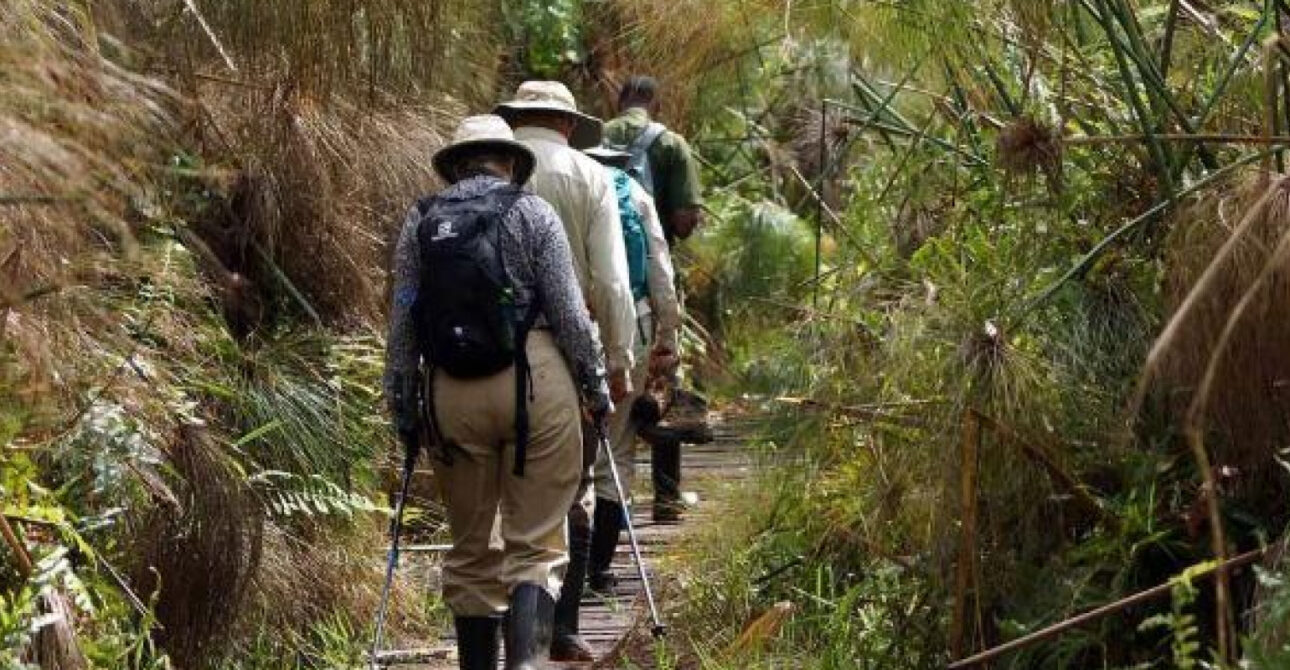
Forest environments provide some of the most immersive settings for nature walks because the experience involves close observation of vegetation, sounds and smaller forms of wildlife. Uganda’s forest destinations include landscapes around Bwindi, Mgahinga and Kibale, while Rwanda’s Nyungwe provides extensive rainforest trails.
A forest-based nature walk can focus on the ecosystem rather than a particular animal encounter. Travellers may observe birds, butterflies, plants, primates and other signs of forest life while learning about the habitat from a guide. The activity can also complement dedicated Chimpanzee Tracking, Birding, Gorilla Trekking and Forest Walks, allowing travellers to experience the same destination from different perspectives.
Nature Walks in Savannah and Wetland Landscapes
Nature walks are not limited to forests. Savannah, woodland and wetland environments can provide a different walking experience, with wider views and opportunities to observe birds, plants, tracks and wildlife signs.
Toro-Semliki Wildlife Reserve is one example. UWA describes its nature walk as passing through savannah woodland and riverine forest, with possible sightings including ground hornbills, warthogs, Uganda kobs, baboons and monkeys.
Queen Elizabeth National Park also offers nature walks alongside game drives and boat activities. A traveller can spend part of the itinerary observing wildlife from a vehicle, then explore selected habitats on foot with a guide. The combination creates opportunities to appreciate the landscape, vegetation and smaller details that are less noticeable during vehicle-based activities.
Can a Nature Walk Be Combined With Gorilla Trekking?
Yes. A nature walk can complement Gorilla Trekking by providing a different way to experience the forest environment. Gorilla trekking is focused on locating and observing habituated gorilla groups, while a nature walk can give greater attention to vegetation, birds, insects, scenery and other signs of forest life.
In southwestern Uganda, nature-based walking can therefore be incorporated around a Gorilla Trekking itinerary in Bwindi or Mgahinga, depending on the activities available at the chosen sector and current park arrangements.
The combination can create a more varied schedule, giving travellers additional time in the landscape without making every activity centred on a specialised animal encounter. Activity selection should take account of fitness, trail conditions, timing and guidance from the relevant protected-area authority. Also Read. Gorilla Trekking Guide.
Can a Nature Walk Be Combined With Chimpanzee Tracking?
Yes. Nature walks and Chimpanzee Tracking provide different experiences and can complement one another in a primate-focused itinerary. Chimpanzee Tracking concentrates on locating habituated chimpanzee communities, while a nature walk can focus more broadly on the surrounding ecosystem.
Kibale is particularly suitable for combining forest-based experiences with chimpanzee activities, while Nyungwe provides opportunities for forest trails alongside chimpanzee and other primate experiences.
Combining the activities allows travellers to spend more time in the forest while experiencing different aspects of the ecosystem. The exact combination should be planned around activity schedules, trail conditions, permits where applicable and the amount of time available at the destination.
Can a Nature Walk Be Combined With Birding and Wildlife Viewing?
Yes. Nature walks are particularly compatible with birding and wildlife viewing because the slower pace creates opportunities to listen for calls, observe vegetation and notice animal signs.
A guided walk can complement a game drive by moving attention from large mammals and open landscapes to smaller species and habitat details. In Toro-Semliki, UWA notes bird and wildlife encounters along the nature-walk route, while Rwanda’s Nyungwe trails provide opportunities for birding and primate observation.
For birders, the walking experience can be incorporated into a broader specialist itinerary. For general safari travellers, it can simply provide a change of pace between vehicle-based activities. The guide, habitat, time of day and current conditions all influence what can be observed, so sightings should never be treated as guaranteed.
What Is the Best Time for Nature Walks in Uganda and Rwanda?
The best time for Nature Walks in Uganda and Rwanda depends on the destination, trail and activities being combined. Drier periods can make some trails easier to walk, while rainfall can produce muddy or slippery conditions in forests and other natural environments.
Visit Rwanda tourism information notes that Nyungwe trails can vary in difficulty, while the forest’s steep paths may become muddy after rain. Uganda’s protected areas also have different local weather patterns, so conditions can vary between forests, savannahs and mountain environments.
Nature walks can still be planned throughout the year. For a specific itinerary, consider the destination’s seasonal conditions, the walking distance, the activities scheduled on the same day and the amount of time available for the experience. Read. Best Time to Visit Uganda for a Safari
Is a Nature Walk Difficult and Safe?
The difficulty of a nature walk depends on the destination, trail, distance, terrain, elevation and weather. Some walks are relatively gentle, while others may include uneven ground, slopes, roots, muddy sections or longer distances. A nature walk should therefore be selected according to your fitness, experience and available time.
Safety also depends on following the instructions of the guide and protected-area authority. Stay on designated routes, maintain appropriate distance from wildlife and avoid moving away from the group without guidance. Suitable walking shoes and rain protection are useful in forest environments, where trails can become slippery after rainfall.
Responsible Tourism During a Nature Walk
Responsible nature walking means enjoying the environment without damaging the habitats or disturbing wildlife. Stay on designated trails, follow your guide’s instructions, avoid littering and do not remove plants, flowers, rocks or other natural materials.
Keep noise levels low, maintain appropriate distance from wildlife and avoid feeding or attempting to touch animals. Respect local communities and follow photography guidance when people or culturally significant places are encountered.
In protected areas, tourism operates alongside conservation and community interests. Uganda Wildlife Authority manages protected areas with conservation and tourism responsibilities, while Rwanda Development Board also links nature experiences with conservation and community benefits.
What Should You Wear and Carry for a Nature Walk?
Wear comfortable clothing suitable for walking and choose sturdy footwear with good grip. A lightweight waterproof jacket or raincoat is useful in Uganda and Rwanda, particularly in forest and mountain environments where weather can change during the day.
Carry a small daypack with drinking water, sun protection, insect repellent, a hat and any personal medication you require. Binoculars and a camera can be useful for travellers interested in birds, plants and wildlife. For longer walks, follow the equipment recommendations provided by the local guide or protected-area authority.
Avoid carrying unnecessary items that make walking uncomfortable. The appropriate packing list depends on the destination, duration, weather and activity being combined with the nature walk.
Frequently Asked Questions About Nature Walks
A nature walk focuses broadly on observing the natural environment, while a forest walk specifically explores a forest ecosystem. Both can include birds, plants, insects and wildlife signs, but the forest walk places greater emphasis on the character and ecology of the forest.
Uganda offers nature-walking opportunities in several protected areas and landscapes. Queen Elizabeth National Park and Toro-Semliki Wildlife Reserve are examples with documented nature-walk activities, while other destinations provide forest and nature-based walking experiences.
Rwanda offers walking experiences across its western landscapes, including Nyungwe National Park, the Lake Kivu region and the Volcanoes area. Nyungwe has an extensive network of forest trails suitable for different walking experiences.
Yes. A nature walk can be combined with Wildlife Viewing, Chimpanzee Tracking, Gorilla Trekking, Birding, boat activities and cultural experiences. The combination depends on the destination, activity schedules, trail conditions and the amount of time available.
Many shorter nature walks can suit families, depending on the trail and the ages and fitness of the children. Choose routes according to distance, terrain and weather conditions, and confirm the activity requirements with the relevant park authority or local guide before travelling.
Why Choose Njagi Safaris for Nature Walks?
Njagi Safaris can include a Nature Walk in Uganda and Rwanda within a private itinerary designed around your interests, available time and preferred pace.
Combine nature walks with Wildlife Viewing, Gorilla Trekking, Chimpanzee Tracking, Birding, Forest Walks, Hiking, cultural experiences and scenic travel. We can also help structure the walking experience around the wider safari route, allowing you to explore natural landscapes without making every day physically demanding.
Primate & Savannah

Heritage Trails

The Thousand Hills
Plan Your Nature Walk
Plan your Nature Walk in Uganda and Rwanda around the destination, trail, season, fitness level and other safari activities you want to experience. Contact Njagi Safaris to develop a private itinerary around your interests.