Hiking in Uganda and Rwanda
Hiking in Uganda and Rwanda offers an active way to experience mountains, forests, volcanic landscapes and scenic countryside beyond the main safari routes. Trails range from shorter nature hikes to demanding mountain excursions, allowing travellers to choose experiences that match their interests, fitness and available time. In Uganda, hiking opportunities include the Rwenzori Mountains, Mount Elgon and the Virunga landscapes of Mgahinga. Rwanda offers hiking experiences across the Volcanoes region, Nyungwe National Park and the landscapes around Lake Kivu. Hiking can also complement Gorilla Trekking, Chimpanzee Tracking, Birding, Forest Walks and Wildlife Safaris, creating a more varied journey across Uganda and Rwanda.
What Is Hiking in Uganda and Rwanda?
Hiking in Uganda and Rwanda offers a way to explore forests, mountains, volcanic landscapes, ridges and other natural environments on foot. Unlike a short nature walk, hiking generally involves a defined trail, greater distance, elevation gain or more sustained physical activity, although difficulty varies considerably between routes.
Uganda offers hiking experiences ranging from forest and mountain trails to demanding multi-day treks. The Rwenzori Mountains and Mount Elgon are important destinations for mountain hiking, while Mgahinga provides access to volcanic terrain in southwestern Uganda. UWA currently identifies mountain hiking among the activities available in the Rwenzori and Mount Elgon national parks.
Rwanda also offers hiking across its western landscapes, including the Volcanoes region, Lake Kivu area and Nyungwe National Park.
Where Can You Go Hiking in Uganda?
Uganda offers hiking opportunities across different landscapes and elevations. The Rwenzori Mountains provide some of the country’s most demanding mountain experiences, with routes ranging from shorter treks to high-altitude climbs. Mount Elgon provides additional mountain hiking opportunities, while Mgahinga offers hikes on the Virunga volcanoes.
The experience changes significantly with the destination. Mountain routes can involve steep terrain, changing weather and higher elevations, while shorter forest and lower-altitude trails may be more accessible. UWA’s current park information identifies Rwenzori and Mount Elgon as mountain-hiking destinations, while its protected-area network also includes Mgahinga and Bwindi.
Hiking in the Rwenzori Mountains
The Rwenzori Mountains offer a wide range of hiking and mountaineering experiences. UWA describes the park as a major hiking and climbing destination, with shorter non-technical treks alongside demanding summit routes. Margherita Peak requires a much more technical and extended ascent than shorter mountain experiences.
Hiking on Mount Elgon
Mount Elgon provides mountain hiking through changing vegetation and landscapes. Routes can range from extended hikes towards the mountain’s higher areas to shorter walks around the lower sections. This makes Mount Elgon relevant to travellers seeking a mountain experience without automatically committing to the highest level of technical climbing.
Where Can You Go Hiking in Rwanda?
Rwanda’s hiking opportunities extend particularly across the country’s western region, from the Volcanoes National Park area through the Lake Kivu landscape and southwards to Nyungwe National Park. The experiences range from shorter scenic hikes to more demanding mountain and forest trails.
In Volcanoes, hiking can include routes around the volcanic landscape, while Nyungwe offers an extensive network of forest trails through steep and varied terrain. Lake Kivu provides another setting, with hills, rural landscapes and sections of the Congo Nile Trail.
Rwanda’s hiking experiences can also complement Gorilla Trekking, chimpanzee tracking, birding, forest walks and scenic travel, allowing hiking to become part of a wider itinerary rather than a separate trip.
Hiking in Volcanoes National Park
Volcanoes National Park combines steep volcanic landscapes with montane forest, bamboo, grassland and heath. Hiking options include shorter trails and more demanding mountain routes. Visit Rwanda identifies hiking as one of the activities available in the region.
Hiking in Nyungwe National Park
Nyungwe National Park provides forest hiking across trails of different lengths and difficulty. Visit Rwanda describes routes ranging from relatively easy trails such as Igishigishigi to more demanding experiences such as Imbaraga, Bigugu and other mountain and forest routes.
Hiking vs Forest Walk vs Nature Walk: What Is the Difference?
The terms overlap, but they can describe different levels of walking experience. A Forest Walk focuses specifically on exploring forest environments, while a Nature Walk can cover a broader range of natural habitats and may be shorter or less physically demanding.
Hiking generally places greater emphasis on distance, terrain, elevation or sustained physical activity. The distinction is not absolute because protected-area authorities use activity names differently. For example, Rwanda presents both hiking and nature walking experiences across Nyungwe, while Uganda provides several types of walking and mountain activities.
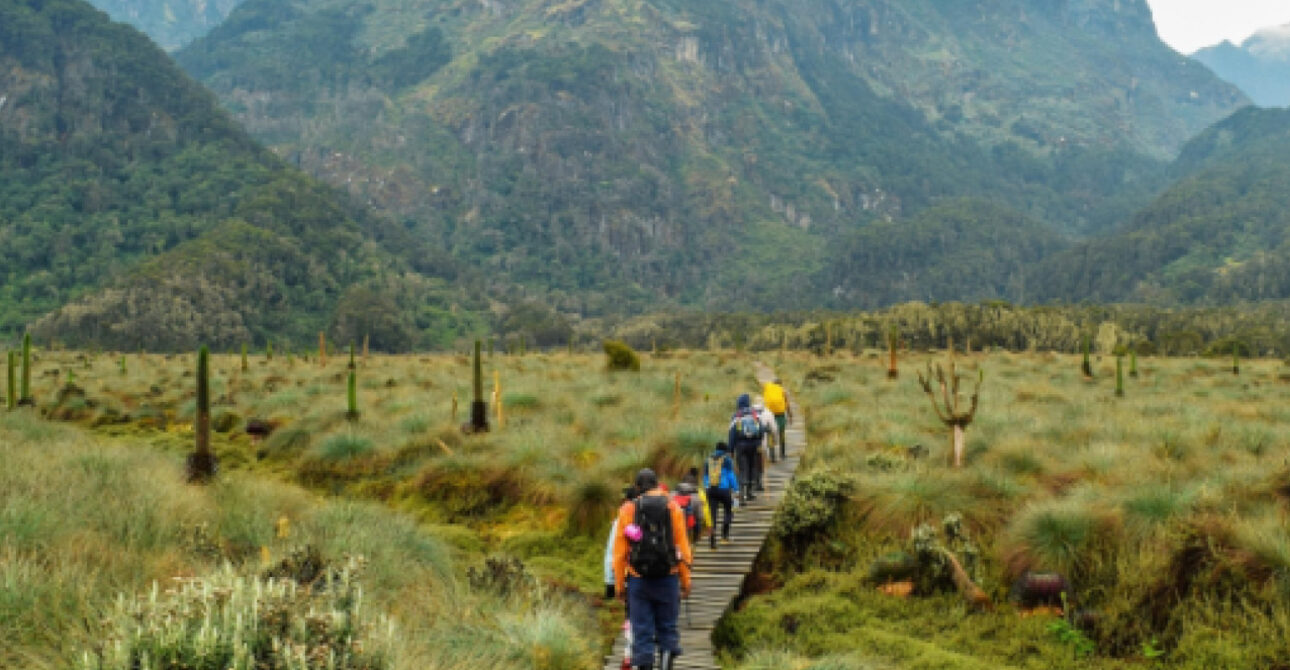
Hiking in the Rwenzori Mountains
The Rwenzori Mountains provide hiking experiences across montane forest, bamboo, higher-altitude vegetation and alpine landscapes. Routes vary considerably in duration and physical demand. UWA identifies both shorter non-technical treks and demanding summit climbs, with Margherita Peak requiring an extended technical ascent.
For travellers interested in a mountain experience rather than a summit attempt, shorter routes can provide an introduction to the Rwenzori landscape. Longer treks require substantially more preparation, appropriate equipment and sufficient time.
Hiking in Nyungwe National Park
Nyungwe is one of Rwanda’s principal forest-hiking destinations, with trails passing through rainforest, ridges, valleys, waterfalls and other varied habitats. Visit Rwanda lists routes ranging from relatively easy trails to demanding hikes intended for experienced hikers.
The Igishigishigi Trail provides a shorter forest experience, while routes such as Imbaraga, Bigugu and Isumo offer more demanding hiking. Other trails provide opportunities for birding, primate observation, waterfalls and scenic viewpoints. Hiking in Nyungwe can therefore be combined with chimpanzee tracking, birding, forest walks and the Nyungwe Canopy Walkway.
Can Hiking Be Combined With Gorilla Trekking?
Yes. Hiking can complement Gorilla Trekking when travellers want additional time exploring the surrounding mountain and forest landscapes. The two activities have different purposes: gorilla trekking focuses on locating and observing habituated mountain gorilla groups, while hiking can focus more broadly on scenery, vegetation, elevation and physical exploration.
In Uganda, hiking around Mgahinga can form part of a southwestern itinerary alongside gorilla trekking. In Rwanda, the Volcanoes region provides additional hiking and nature experiences around a gorilla-focused journey. The combination should be planned around the traveller’s available time and physical capacity.
Can Hiking Be Combined With Birding and Wildlife Experiences?
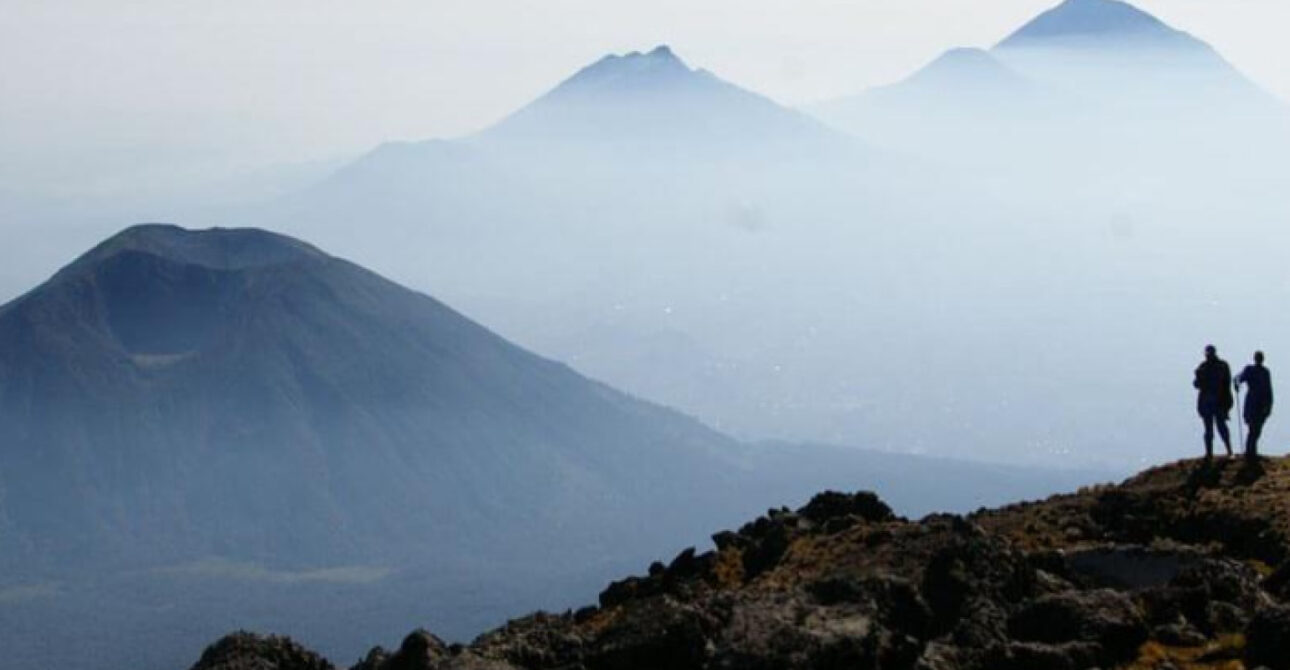
Mgahinga Gorilla National Park provides access to the volcanic landscape of southwestern Uganda. Hiking routes include the mountains of the Virunga range, with terrain passing through montane forest, bamboo and higher-altitude vegetation.
The Mount Muhavura, Mount Gahinga and Mount Sabinyo landscapes offer different hiking experiences. UWA information describes steep and challenging sections on the Sabinyo route and substantial elevation on the Muhavura hike. These hikes can be incorporated into a wider southwestern Uganda itinerary alongside Gorilla Trekking Safaris, Golden Monkey Tracking, forest walks and cultural experiences.
What Is the Best Time for Hiking in Uganda and Rwanda?
The best time for Hiking in Uganda and Rwanda depends on the destination, trail, elevation and type of experience. Hiking can take place throughout the year, but rainfall can affect trail conditions, visibility, footing and walking comfort.
Rwanda’s hiking destinations can be visited year-round, while drier periods can provide more favourable trail conditions. Nyungwe’s rainforest trails can become muddy after rain, and higher or steeper routes require additional preparation.
Uganda’s mountain environments also have changing weather conditions, particularly at higher elevations. For longer hikes and mountain treks, check current trail conditions and follow guidance from the relevant park authority and local guides. Read. Best Time to Visit Uganda for a Safari.
Is Hiking in Uganda and Rwanda Difficult?
Hiking difficulty depends on distance, elevation, terrain, weather and trail conditions. Short forest or scenic trails can be relatively manageable, while mountain routes may involve steep slopes, extended walking, high elevations and more demanding terrain.
Rwanda’s Nyungwe trails illustrate this range, with Visit Rwanda describing some routes as suitable for novice hikers and others as difficult or intended for experienced hikers. Uganda’s Rwenzori routes range from shorter non-technical treks to technical summit ascents.
Choose the trail according to your fitness, hiking experience and available time. A longer or higher-altitude route should not be selected simply because it is available; preparation should match the actual demands of the trail.
What Should You Wear and Carry for a Hike?
Wear comfortable, moisture-appropriate clothing and sturdy walking shoes or hiking boots suited to the terrain. A lightweight waterproof layer is useful in forest and mountain environments, where rain can develop quickly.
A daypack should contain drinking water, snacks, sun protection, insect repellent and any personal medication you require. For longer or higher-altitude hikes, the required equipment can be substantially greater and should be confirmed with the guide or operator before departure. The exact packing list should reflect the destination, season, trail length, elevation and planned activity.
Is Hiking Safe in Uganda and Rwanda?
Hiking is a managed outdoor activity, but safety depends on appropriate preparation and following local guidance. Stay with your guide or group, remain on designated trails and follow instructions from the relevant protected-area authority.
Mountain environments can involve steep terrain, slippery surfaces, changing weather, altitude and other physical challenges. High-altitude or technical routes require additional preparation and appropriate equipment. UWA has introduced safety measures and equipment on sections of the Rwenzori hiking system, while current conditions can still change. Before departure, confirm current trail access, guide requirements and activity conditions.
Responsible Tourism During a Hike
Responsible hiking means protecting the landscapes you travel through while respecting wildlife, guides and local communities. Stay on established trails, avoid littering, do not remove plants or natural materials, and keep noise levels low.
Mountain and forest ecosystems support diverse wildlife and vegetation, much of which may not be immediately visible. Following local guidance helps reduce disturbance and protects fragile trail environments.
For Uganda, consult the Uganda Wildlife Authority for protected-area information and current visitor guidance. For Rwanda, Rwanda Development Board provides official tourism information on hiking destinations and experiences.
Frequently Asked Questions About Hiking
Uganda offers hiking across several landscapes, including the Rwenzori Mountains, Mount Elgon and Mgahinga. The best destination depends on the desired trail length, elevation, scenery, physical challenge and available time.
Rwanda offers hiking in the Volcanoes region, around Lake Kivu and in Nyungwe National Park. Nyungwe provides forest trails of varying difficulty, while Volcanoes offers mountain and volcanic landscapes.
Yes. Hiking can be added before or after gorilla trekking to explore the wider forest and mountain landscape. In Uganda, Mgahinga offers volcanic hiking alongside gorilla experiences, while Rwanda’s Volcanoes region provides additional hiking opportunities.
Guide requirements vary according to the destination and trail. Some protected-area hiking experiences require a guide or permit, particularly in Rwanda. Always confirm the current requirements with the relevant park authority before travelling.
Some hiking routes are suitable for beginners, while others require greater fitness and experience. Rwanda’s Nyungwe network, for example, includes relatively easy trails as well as demanding routes. Select the trail according to your fitness and hiking experience.
Why Choose Njagi Safaris for Hiking?
Njagi Safaris can include Hiking in Uganda and Rwanda within a private itinerary based on your interests, fitness, available time and preferred pace. Combine hiking with Gorilla Trekking, Chimpanzee Tracking, birding, wildlife viewing, forest walks and scenic experiences across Uganda and Rwanda.
Mountains Of The Moon

Volcanoes and Primates
Virunga & Bwindi Odyssey
Plan Your Hiking Experience
Plan your Hiking in Uganda and Rwanda around the destination, trail difficulty, season, available time and other safari experiences. For detailed planning information, visit our Travel Resources, then Contact Njagi Safaris to develop a private itinerary around your interests.